
Could Starlink Be THE Convenient Bus For Other Types of Low Earth Orbit Missions?
If there already is a satellite bus format that works, could we not use it for other activities apart from a telecommunications constellation?

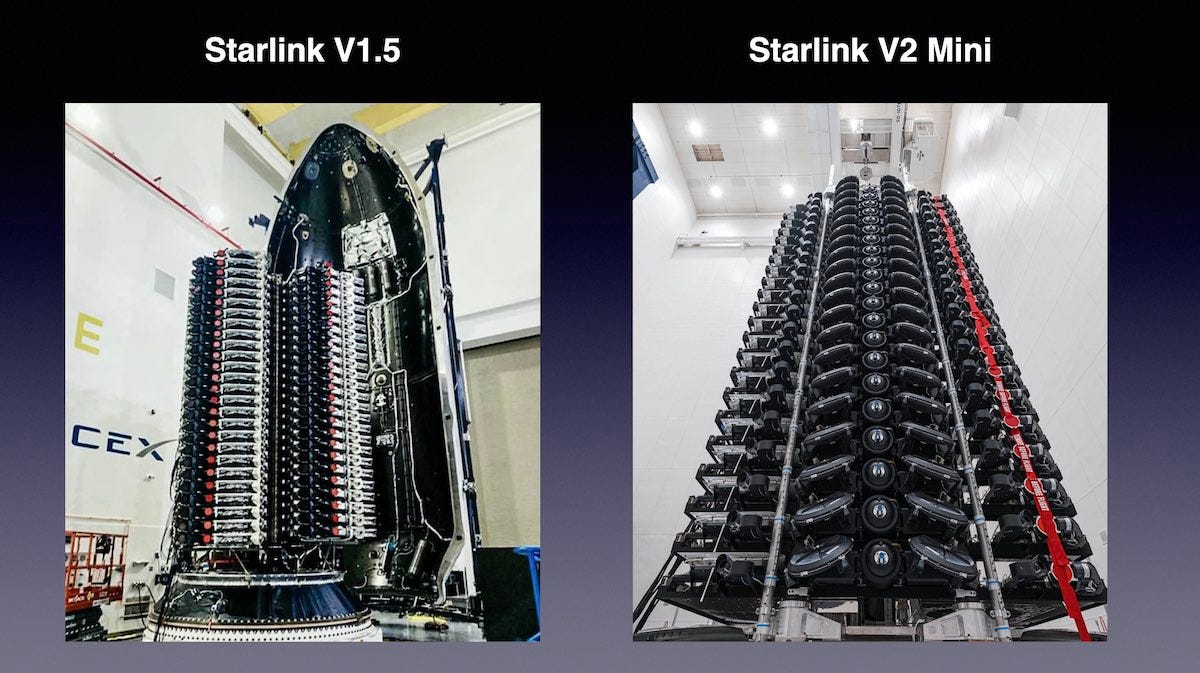
Why do you have to re-invent the wheel?
Why do you have to go through all the qualification of a satellite just because a payload has changed?
Why when the control system, computers, power, propulsion, even launch stacking formation has ALL been defined and repeatedly tested in flight, do you need to build another satellite type just because you want to change the payload?
Starlink Satellites are a turnkey solution
It dawned on me recently that not only do Starlink have an ion propulsion turnkey solution, their whole launch platform is a turnkey solution. And there are other types of surveillance constellations that could be created.
One being an in-situ debris tracking radar constellation, something that the Adras-J mission revealed is sorely needed if we are to perform many more debris inspection or removal missions.
The Adras-J Revelation
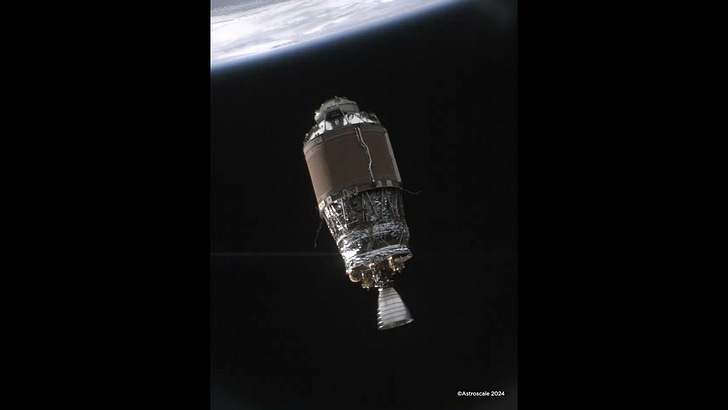
The Adras-J mission by AstroScale was to demonstrate that their spacecraft could perform proximity operations around a piece of debris that could then be moved to a different orbit or removed by a later mission. This in essence is a demonstration of the foundations of serious “garbage disposal” of large debris objects.
The main and obvious obstacle though, is “Would SpaceX sell Starlink as a platform bus?”
Short cut to results
Typically the hurdles to get a new satellite bus into space are many. There’s the initial design, then qualification and acceptance of not just the bus physical structure but all the subsystems. This can take at least a few years, often a decade or more. This can be shortened if the bus provider is willing to take on more risk or use a lean approach to development.
Secondary issues are finding a launch provider, working out launch and orbital licensing and working out the return of investment (ROI). Very often a bus will appear amongst the big primes like Lockheed Martin or Airbus (Astrium) but initial payloads will be agency missions rather than solely commerical. This means you have to balance the often rapid cadence of industry, requiring less specific satellite functionality, with the detailed requirements often with scientific payloads. And if the initial missions are fully scientific agency-led missions you won’t be seeing a quick return on investment, if at all. Many such missions are loss leaders. Great for general data collection and scientific study but not something that provides a near-term return.
For many years, ESA has had a desire to create a common bus format using technologies from various supppliers, typically from Europe. The Spacebus NEO satellite bus is a recent example. Over the last few years the bus has been qualified and missions launched. This bus is designed for a certain type of mission and orbit which in itself is an admirable goal.
However while this was going on SpaceX built hundreds of Starlink and deployed them initially to 550 km altitude and now to 440 km. There are around 5000 of these buses (satellites) in space at the moment.
That is three orders of magnitude more than Spacebus NEO.
These days constellations are the biggest contributor to the increase in space objects, both payloads and debris. Such constellations already exist and operate in formations with proven attitude configurations.
The ground, or the space, has been furrowed somewhat already.
So if you were to build a debris tracking system an obvious choice would be the repurpose the payload on a Starlink but keep everything else the same, including launch configuration, flight operations, disposal etc.
In cost terms, development would just be on the debris tracking payload and integration. Everything else would be qualified.
Would SpaceX build their own?
An obvious question is: couldn’t SpaceX just does this themselves?
Could they not just build an in-situ monitoring system using the Starlink platform?
Honestly I think they could and they may even be planning this. It has been SpaceX’s and Elon Musk’s focus to drive technological innovation through lean fast learning processes, and not be stuck having years of management meetings just there to keep people looking like they are doing something.
This is one of the reasons why SpaceX has rapidly grown and had the successes they have.
It’s the DO attitude rather than the WELL???? SHOULD WE attitude.
We have a lot of challenges in moving mankind more into space, many of which will require a level of effort and focus that appears lacking in agencies and governments. Primarily because it is difficult and there is often not instant gratification or money/leverage to be had.
But we are at the stage were space debris monitoring and capture missions are looking likely on a larger scale in the next decade. And in order to maximise this and not create more debris, we need higher resolution debris tracking and monitoring systems. And on a scale where they are easy to deploy, maintain and adjust.
Starlink is the best example of such a system. We should be looking to utilise it.